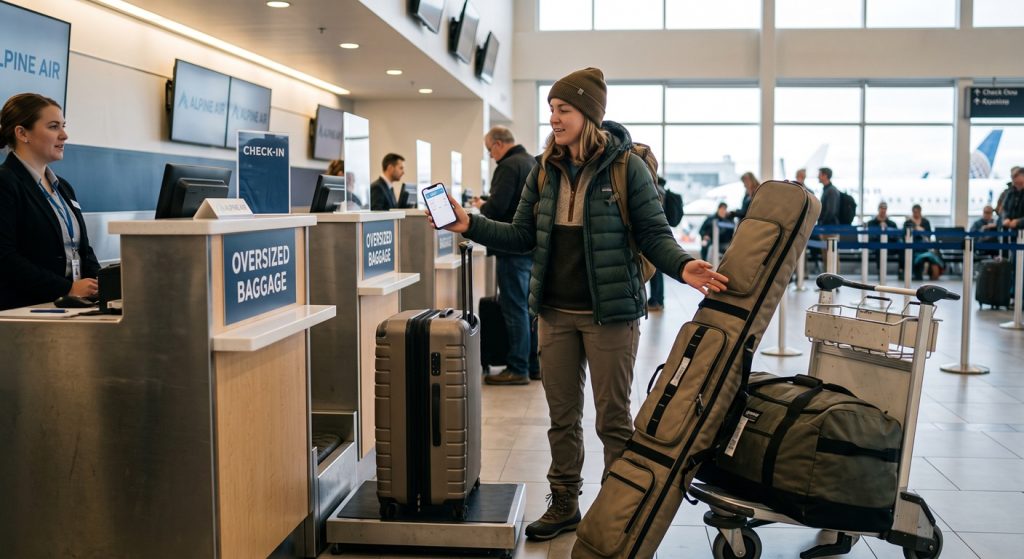
Most annual travel policies do not cover skiing. They cover the flight, the hotel booking and the suitcase, then stop at the bottom of the chairlift. Skiing and snowboarding sit in the same category as scuba diving and skydiving for most insurers, which means cover only exists if you added it, paid for it and can point to it in the policy schedule.
That gap matters more than it used to. Rescue on the mountain is expensive, the rules on who pays differ by country, and the exclusions buried in winter sports wording are the reason claims get refused. Here is what the cover does, what it leaves out, and what to check before a December booking turns into a bill.
A GHIC is not insurance, and the NHS says so
UK travellers reaching for the Global Health Insurance Card should read what it actually promises. A GHIC gets you state healthcare in the EU on the same terms as a local resident, which is genuinely useful for a fracture treated in a public hospital. It stops well short of that. The NHS is explicit that the card does not cover ski or mountain rescue, treatment in a private facility, or being flown home.
Every one of those three is the expensive part of a ski accident. Many Alpine resort clinics are private, so the card buys you nothing at the door. Repatriation by air ambulance runs into five figures. And rescue, as below, is billed separately by people who are very good at billing.
Travellers from outside the UK have their own equivalents, and the same warning applies: a reciprocal healthcare arrangement is not a substitute for a policy.
Who pays for the rescue
France draws a line that catches people out. Rescue in the open mountains, away from ski areas, is a state service and generally free. On skiable terrain it is not, and communes are allowed to bill for rescues on and off the marked pistes inside the ski area boundary. Each commune sets its own tariff each season and posts it at the lift office. Morzine’s published schedule for 2024/25, as an example of the scale involved, listed around €72 for help at the snow front and just over €500 for an evacuation by sled from the far zone, with helicopter costs charged on top.
Helicopters are where the numbers turn serious. French industry figures put a typical helicopter evacuation near €1,850, and the country’s Court of Auditors reported in February 2026 that a rescue involving a helicopter and specialist crews now averages close to €10,800. The same report recommended charging for some negligence-related rescues from 2028, so the free-in-the-open-mountains position is not permanent.
Switzerland and Austria never had that ambiguity. Rescue is billed to the person rescued, and helicopter time is charged by the minute. Austrians deal with this by joining a rescue organisation for a small annual fee. Visitors deal with it by having a policy.
The exclusions that void claims
The FCDO publishes guidance for winter sports abroad that reads like a list of things people assume are covered. Three of them come up again and again in refused claims.
Off-piste is the big one. Plenty of policies cover it only when you are with a qualified guide, which is fine in theory and useless in Chamonix, where the interesting terrain starts a few metres from a marked run. If you ski anywhere near the boundary, buy a policy that covers off-piste without a guide and check the wording rather than the marketing headline.
Helmets and alcohol account for most of the rest. Many policies require a helmet at all times, and cover may not stand if you injure yourself or someone else while drunk. Altitude limits are worth a search through the policy document too, since a cap that sounds generous on paper can quietly exclude a resort you have already booked.
Rental equipment is the quiet one. A number of policies decline damage to hired skis, which is worth knowing before you sign the shop’s own waiver.
What winter sports cover adds
Beyond medical treatment and rescue, a proper winter sports section pays for things that only go wrong on a ski trip. Skis and boards, owned or hired, against theft and damage. The unused portion of a lift pass, lessons and hire when an injury ends your week on day two. Piste closure, which pays out when avalanche risk or a lack of snow shuts the ski area, and matters in a warm January.
The market splits into two useful groups. Mainstream insurers add winter sports as a tick box on a general policy and price it cheaply, with tight limits and guide requirements attached. Specialists build the policy around the activity. True Traveller’s winter sports cover is a reasonable example of the second type: skiing has to be added rather than assumed, but the add-on then covers off-piste without requiring a guide, along with alpine ski touring and heliskiing, plus equipment, lift pass and piste closure. It also lets you strip out general baggage cover if your home contents policy already handles luggage, which is a sensible way to avoid paying twice.
Whoever you buy from, check the insurer is authorised in your country. UK policies show a firm reference number that you can look up on the Financial Conduct Authority register in about a minute.
Buy it when you book, not when you pack
Cancellation cover starts the day the policy begins, so a policy bought the night before departure has protected nothing during the four months when you were most likely to break an ankle at home or have a work contract collapse. Book the trip, buy the policy the same week, and the cancellation section actually earns its place.
Two other bits of timing. If you ski more than once a season or travel a lot anyway, an annual multi-trip policy with winter sports added usually costs less than two single-trip policies, though most have a maximum trip length and an upper age limit. And if you are reaching the Alps overland rather than flying, our guide to travelling Europe by train covers the passes and reservation rules, which is a separate headache from the insurance one but tends to land in the same week of planning.
Print the emergency assistance number, save it in your phone, and put a copy of the policy in the chalet. In an Alpine clinic the first question after your name is who is paying, and the right answer takes about ten seconds if you have the number.